Podcasts
The UK Desk is an AI-voiced briefing from The Johny Webb Show. Listen below and follow the sources linked in the episode notes.
https://johnywebb.com/podcast-feed
This week, we unpack a fascinating report from a British aviator concerning repeated UAP sightings during night flights over Brussels' busy airspace. We'll also cast a critical eye on some sensational international 'giant UFO' claims, before diving into the history and closure of the UK Ministry of Defence's dedicated UFO desk.
- Hear about a British pilot's recurring UAP sightings during night flights over the crowded airspace of Brussels.
- Discover why a trained aviator's testimony is considered particularly weighty when reporting unexplained phenomena.
- We dissect sensational international reports of a "tentacled object" in Alaska and apply a critical lens.
- Explore the fine line between optical illusions, known objects, and genuinely anomalous aerial events.
- Uncover the history of the UK Ministry of Defence's dedicated UFO desk, which operated for decades before its closure.
Show transcript
Good evening, and welcome to The UK Desk from The Johny Webb Show: the week in British UFO and UAP reporting, with the paperwork in one hand and a healthy scepticism in the other. I'm Nigel, and with me as ever...
[MAGS] ...is Mags, here to bring a bit of common sense to all this flummery, and to hear what the people on the ground are actually seeing, rather than what the Ministry of Defence would prefer us to see.
[NIGEL] A healthy tension, as ever. This week on the UK Desk dot com, we're discussing a notable report from a British aviator, but concerning sightings in European skies, alongside some usual international discussions. For our deeper dive, we turn to a significant chapter in the UK's official engagement with unidentified aerial phenomena: the Ministry of Defence's dedicated UFO desk, which operated for decades before its closure in two thousand and nine.
[MAGS] And it's a good time to remind everyone that the full piece, "The UK Desk: Cheshire pilot reports sightings over Brussels, and the MOD's closed UFO desk," is on johnywebb dot com, with every single source linked, so you can go and read it for yourselves. No guesswork here.
[NIGEL] Indeed. So, this week in Britain, or rather, from Britain but in European skies, we have a report from a pilot based in Cheshire. This aviator has claimed to have witnessed several unidentified aerial phenomena during night flights over Brussels.
[MAGS] Oh, Brussels, now that's a busy bit of airspace, isn't it? Full of international flights, military movements sometimes, all sorts. What did they see, exactly?
[NIGEL] Well, as reported by Yahoo News UK, the pilot's accounts suggest repeated encounters with unexplained objects. The report doesn't go into extensive detail about the precise nature of these objects beyond calling them UAP, or Unidentified Aerial Phenomena, but the emphasis is on the fact that these were recurring, during night operations.
[MAGS] Repeated encounters. That's not just a quick flash in the pan, is it? That suggests something... more persistent. And for a pilot, particularly on a night flight, visibility's already limited, so if something is distinct enough to be repeatedly identified as 'unexplained' by a trained observer, that's worth noting.
[NIGEL] Absolutely. A pilot's report carries weight because they are trained observers, accustomed to identifying known aircraft, navigation lights, atmospheric conditions, and so on. Their operational environment is literally the sky. When they can't identify something, it prompts a different kind of inquiry.
[MAGS] So, what do we think the pilot saw? Are we talking about military exercises they weren't privy to? Or perhaps the ever-present problem of drones in controlled airspace? It's a crowded sky over Brussels.
[NIGEL] That's the perennial question, Mags. The report doesn't offer a definitive explanation, merely detailing the pilot's claims. It raises precisely those questions you've just posed: what do pilots encounter in routine operations that falls outside the known catalogue? Could it be classified military craft from a NATO ally, or perhaps experimental prototypes? Or indeed, as you say, unauthorised drone activity, which is an increasing concern globally.
[MAGS] And the pilot is just based in Cheshire, not necessarily flying over Cheshire when these sightings occurred. So it's not a case of local knowledge of a particular type of aircraft or even a local oddity. It's happening in international airspace over a major European capital. That does add a layer of complexity, doesn't it? The sheer number of potential explanations... or lack thereof.
[NIGEL] It certainly does. And without further details from the pilot themselves, or indeed from Belgian air traffic control, or even Eurocontrol, which manages much of that European airspace, it remains firmly in the 'unexplained on file' category for now. A pilot's testimony is often treated as strongly indicated evidence, given their training and position, but without corroboration from other sources, it's hard to move it to established fact.
[MAGS] Right, well, from the skies over Brussels, let's take a look beyond these shores, shall we? Because it sounds like there's been some rather... spectacular stuff, if the headlines are anything to go by.
[NIGEL] Indeed. Much of the international news this week has focused on reports of a bizarre, tentacled object filmed near a US military base in Alaska. Several outlets, including the Daily Star and Outdoors with Bear Grylls, have characterised this as a 'giant UFO'.
[MAGS] Oh, a 'giant UFO'. That's not sensationalist at all, is it? Sounds like something straight out of a low-budget sci-fi film. What exactly was this tentacled marvel?
[NIGEL] The reports featured video footage of the object. While some initial speculation veered towards the truly exotic, NewsNation noted that experts have offered prosaic explanations for the sighting. They suggested it could be a combination of optical illusion, natural phenomena, or known aerial objects.
[MAGS] See, this is where I come in. Someone sees a blob on the horizon, maybe the light's playing tricks, it's a bit misty, and suddenly it's got tentacles and it's from another dimension. I've heard too many stories about lights over the moor that turn out to be someone's fancy new Christmas lights for the garden.
[NIGEL] And it's a valid point. The challenge of discerning the mundane from the genuinely anomalous is ever-present in these cases. NewsNation's reporting on expert opinion highlights the importance of considering all possible conventional explanations first, particularly when faced with video footage which can be ambiguous.
[MAGS] It just shows how quickly something can go viral, doesn't it? One person captures something that looks a bit odd, puts it online, and suddenly the Daily Star has a 'giant UFO' and everyone's talking about it having tentacles. I bet it was a bit of plastic sheeting caught on a thermal updraft or something equally dull.
[NIGEL] Or a cluster of balloons, perhaps, reflecting light in an unusual way. The description 'tentacled' could simply be an interpretation of irregular shapes or shadows within an ambiguous image. Similarly, a separate NDTV report questioned if a viral video of a 'jellyfish-like object' was a kite, drone, or something else entirely. Again, highlighting that same challenge.
[MAGS] 'Jellyfish-like'. They're getting more creative with their descriptions, aren't they? But it's always the same questions: is it a kite? Is it a drone? Is it something else? And usually, it's the first two, isn't it? Or just a bit of plastic bag caught on the wind, far too high up for anyone to identify easily.
[NIGEL] Precisely. But not all natural explanations are quite so prosaic. Elsewhere in Europe, for instance, the Weather Channel and News dot com dot au both reported on 'spectacular UFO-like clouds' spotted over Mount Teide in Tenerife, Spain.
[MAGS] Oh, lenticular clouds! I love those. They look absolutely stunning. Like a stack of pancakes, or indeed, like flying saucers.
[NIGEL] They do. These reports serve as a useful reminder that many instances of seemingly unusual aerial phenomena have entirely natural explanations. Lenticular clouds, due to their distinct, disc-like appearance and smooth edges, are often mistaken for solid craft. They form when stable moist air flows over a mountain or a range of mountains, creating standing waves in the atmosphere.
[MAGS] They're proper beautiful, though. And if you didn't know what you were looking at, especially if the light was just right at dawn or dusk, I can absolutely see why someone would think they were seeing something quite extraordinary. It's a world away from a blurry tentacled thing in Alaska, isn't it? That's firmly established as a natural phenomenon.
[NIGEL] That part is on the record, yes. And it brings us rather neatly to our deeper dive for this week, "From the files," where we examine the Ministry of Defence's dedicated UFO desk.
[MAGS] The MOD UFO desk. That always sounds a bit X-Files, doesn't it? You imagine men in dark suits poring over reports of little green men.
[NIGEL] Well, perhaps less X-Files, more Hansard and filing cabinets. For almost sixty years, from the early nineteen fifties until its closure in two thousand and nine, the Ministry of Defence maintained a dedicated desk for processing and assessing public reports of unidentified aerial phenomena.
[MAGS] Sixty years. That's a good run for a desk, isn't it? So it wasn't just a brief flurry of interest; this was a consistent, decades-long operation. What prompted them to set it up in the first place?
[NIGEL] It was initially driven by Cold War concerns about potential Soviet incursions. The unit, often referred to simply as the UFO desk, operated within various branches of the MOD, later becoming a point of contact for a curious public as well. Its primary mandate, though, was not to investigate the scientific nature of UAP or to seek out evidence of extraterrestrial visitation.
[MAGS] No, I imagine not. That sounds far too proactive for the MOD. So, what was its function then, if not to look for aliens?
[NIGEL] Its function was strictly limited to defence implications: to determine whether the reported sightings posed any threat to UK national security or represented a breach of national airspace.
[MAGS] So they weren't really interested in what it was, only if it was going to bomb us. A pragmatic approach, I suppose, if a little narrow-minded when you consider the scope of what people were reporting.
[NIGEL] That was the official line. Reports came from diverse sources, including members of the public, civil police forces, commercial pilots, and military personnel, particularly from the Royal Air Force. All channelled into this specific, security-focused assessment.
[MAGEL] So all those little old ladies who swore they saw lights over their allotment, and the police constables who filed a report because they didn't know what else to do with it... they all ended up at this desk.
[NIGEL] Indeed. And over its half-century existence, the desk consistently concluded that the vast majority of sightings could be explained by conventional phenomena – aircraft, satellites, meteors, balloons, or optical illusions.
[MAGS] The usual suspects, then. But what about the ones they couldn't explain? Because I bet there were some.
[NIGEL] A small percentage of reports remained unexplained on file, typically due to insufficient information. However, these were never officially deemed to represent a defence threat. The official position was that there was no evidence of any hostile intent or advanced foreign technology, nor any credible indication of non-terrestrial craft.
[MAGS] "Insufficient information." That's a bit of a cop-out, isn't it? Was it that the public didn't give enough information, or that the desk didn't have the resources or the mandate to pursue the information they did have? Because if someone saw something truly anomalous, and they were told it was just "insufficient information," I imagine that wouldn't have gone down very well.
[NIGEL] It speaks to the limits of their mandate, doesn't it? If a sighting couldn't be definitively identified as a known conventional object, but also didn't clearly demonstrate hostile intent or advanced technology, it simply fell into a residual category. It wasn't their job to pursue every unidentifiable light in the sky to its scientific conclusion. It was a national security desk, nothing more.
[MAGS] And yet, for sixty years, they kept taking the calls, kept processing the reports. That's a huge amount of public engagement, even if the official line was always 'nothing to see here, move along'. What changed in two thousand and nine? Why did they finally shut it down?
[NIGEL] The decision to close the desk in December two thousand and nine was attributed to the consistent finding that UAP had no defence significance. The MOD stated that the desk consumed disproportionate resources and had not identified any genuine threat to national security in over five decades of operation.
[MAGS] So, they basically said, "This is costing us too much money, and we haven't found a single alien threat, so let's just close it." That's a very British way of looking at things, isn't it? Purely pragmatic.
[NIGEL] It was. This closure brought an end to the official, centralised recording of public UAP reports in the UK. The MOD argued it was a pragmatic decision based on a lack of findings relevant to their core mission.
[MAGS] But there must have been criticism, surely? All those researchers, all those people who'd been sending in their reports for decades, they must have been furious.
[NIGEL] Indeed. The closure, while justified by the MOD on pragmatic grounds, was met with criticism from researchers and advocates. They argued that it eliminated a valuable, albeit limited, repository of information. Critics suggested that ending official oversight could lead to missed opportunities for understanding genuine aerial anomalies or potential national security concerns that might emerge in the future.
[MAGS] That's a fair point. If you shut down the system for collecting the data, how are you ever going to know if something genuinely new or threatening appears? You're essentially burying your head in the sand. It's not about little green men; it's about being prepared, isn't it?
[NIGEL] It's about data collection, and the potential for a weak signal to become a stronger one over time, as more data accumulates. The MOD's UFO desk remains a significant, if understated, part of the UK's engagement with the UAP phenomenon – a record of official caution and the challenges of managing public interest in the unexplained. And now, of course, with the global increase in UAP discourse and official US government engagement, the UK has no dedicated, centralised point of contact for these matters.
[MAGS] So we're left with pilots reporting things over Brussels, and giant tentacled objects in Alaska, and no official desk here at home to gather it all in. That's a bit worrying, really. What if the next 'unexplained' thing is a threat, and we've got nowhere to send the reports?
[NIGEL] That's a question for another desk, perhaps. For now, the files of the old MOD desk are accessible at The National Archives at Kew, for those who wish to delve into the historical record themselves.
[MAGS] Always a paper trail, Nigel. Always.
[NIGEL] That's The UK Desk for this week. The full briefing, with every story linked to its source, is on johnywebb.com. Keep watching the skies, and keep the receipts. Good night.
[MAGS] And if you've seen something odd over your bit of Britain, write it down while it's fresh. Night, all.
Now playing Now playing
This week, we dive into the latest British UFO and UAP sightings, exploring widespread reports of silent black triangles seen over housing estates across the UK. We also look at other peculiar aerial phenomena, from Tic-Tacs over Wales to enigmatic lights over Manchester, and revisit a historical UK case involving a mysterious crater.
- Persistent reports of silent, dark triangular objects gliding over British housing estates, a pattern noted by locals and even Pentagon officials.
- Diverse regional sightings including 'machines above Moston', 'lights over Levenshulme', Tic-Tac shapes, and pulsating orbs.
- Eyewitness accounts from ordinary people reporting phenomena they can't explain in their own back gardens.
- A historical deep dive into the 1963 'Charlton Crater' case in Wiltshire, a disputed event involving a claimed impact site.
- A Scottish man shares his UFO experiences on the BBC, bringing local sightings to a wider audience.
Good evening, and welcome to The UK Desk from The Johny Webb Show: the week in British UFO and UAP reporting, with the paperwork in one hand and a healthy scepticism in the other. I'm Nigel, and with me as ever...
[MAGS] Mags. Good to be here. Another week, more triangles.
[NIGEL] Indeed. This week, we’re looking at what the article on johnywebb.com, titled "The UK Desk: Black Triangles Over British Housing Estates, and the Charlton Crater Mystery," calls the persistent reports of black triangles across Britain. It’s a theme that seems to recur with surprising regularity.
[MAGS] And it's not just the dark, silent triangles, is it? We've got lights over Levenshulme and Tic-Tac shapes over Wales, if the local papers are to be believed. What a mix.
[NIGEL] Quite. The Daily Star, for instance, reported on these 'black triangle' UFOs allegedly swarming British skies, specifically noting them gliding over housing estates. And Yahoo News UK also mapped UK UFO sightings, highlighting that these 'black triangles' are apparently also a concern for Pentagon officials across the Atlantic.
[MAGS] See, that’s where my ears prick up, Nigel. "Over housing estates." That’s people looking up from their back gardens, from their living room windows, seeing something they can’t explain. It’s not an astronomer with a telescope, it’s a family having tea. And that's what always struck me when I was on the local papers, people calling in. They don't usually ring up to report a drone, do they? Unless it's buzzing their washing line.
[NIGEL] No, they do not. And the article states these reports echo a pattern of dark, often silent, triangular objects described by witnesses over many years, which remain a source of ongoing discussion. The consistency of the description across various, often independent, reports is what makes them notable. It’s not just a single, isolated incident, but a recurring motif.
[MAGS] A motif, aye. And you’ve got to wonder, if it’s an aircraft, why silent? Why triangular, when most conventional aircraft have wings and engines that make noise? It adds up to something... odd.
[NIGEL] Indeed. Moving on to some other local reports this week, several outlets detailed regional UAP activity. The Manchester Evening News mapped sightings over Greater Manchester, describing "machines above Moston and lights over Levenshulme." Similarly, Yahoo News UK detailed every Derbyshire UFO 'sighting' in the last five years, including a "perfect triangle" above one town.
[MAGS] See, there's that triangle again, in Derbyshire. And "machines above Moston," that sounds substantial, doesn’t it? Not just a distant dot. And Lights over Levenshulme. I bet someone’s out there every night looking up now. I always tell people, if you see something, write it down. While it's fresh. Get the details. Time, date, direction, colour, how many of them.
[NIGEL] A good habit to cultivate. And Wales Online mapped that country's UFO hotspots, noting "Tic-Tac" shaped objects and pulsating orbs. So, a fair range of morphologies this week across Britain, not exclusively triangular.
[MAGS] Tic-Tacs. Now those are interesting, aren't they? They've got a bit of a profile, internationally. And "pulsating orbs"... that could be anything from a drone with a dodgy light to something genuinely unknown, couldn't it? It's always hard with just "lights in the sky" reports.
[NIGEL] It is. Which is why the detail, or lack thereof, in the report is always key. And separately, a man from Sauchie, Scotland, appeared on a BBC programme to discuss his 'UFO sightings' in central Scotland.
[MAGS] Ah, the BBC. That’s a bit of a step up from the local paper, isn’t it? That gives a local experience a wider audience. And it’s important for people to feel their experiences are taken seriously, isn’t it? Even if it turns out to be prosaic, the fact that someone is willing to share their story, often under scrutiny, says something about the conviction they have.
[NIGEL] It certainly moves it into a different arena of public discourse. Now, on the historical front, Sky HISTORY TV channel previewed a programme asking: 'Did a UFO land in Wiltshire in 1963?' This is of course the 'Charlton Crater' case, involving a claimed impact site and unusual findings. The article notes it remains a notable though disputed chapter in British UAP history.
[MAGS] Wiltshire in sixty-three. Now that’s a real deep dive into the archives, isn’t it? A claimed impact site, unusual findings. What sort of unusual findings? The article doesn’t specify.
[NIGEL] It does not. Which means we’d need to consult the full programme or original reporting to establish the specific claims. The article only gives us the existence of the programme and the general nature of the case, which is that it’s disputed. We often find that with older cases; the trail of evidence becomes rather faint, leaving us with a patchwork of testimonies and secondary accounts.
[MAGS] Right. It's like a good old newspaper clipping, isn't it? Full of tantalising details, but you're left wanting more, wanting the follow-up, wanting to know what happened next. Sky HISTORY also touched on USOs: The underwater mysteries that have baffled for centuries, a topic of general interest that occasionally intersects with UAP reports.
[NIGEL] Yes, a reminder that the phenomena are not always confined to the atmosphere. Though the article doesn't give us any specific British USO reports this week, it's a good inclusion for context, given some of the more... unusual... UAP observations we do sometimes see.
[MAGS] It certainly is. Well, that’s quite a lot to take in from these shores. But what about beyond these shores, Nigel? Did our friends across the channel or the Atlantic have anything interesting going on?
[NIGEL] Indeed they did. Internationally, the Daily Mail reported on a mysterious 'UFO' spotted in NASA video, sparking claims of a near collision. The article notes that such incidents, often involving distant objects captured by official cameras, are frequently shared and discussed, though rarely result in definitive conclusions.
[MAGS] NASA video, a near collision. That sounds dramatic. But "rarely result in definitive conclusions" is the key part, isn't it? It’s often just a pixel or a bit of space debris that’s caught the light just so. Though you do get some compelling ones sometimes. It’s hard to tell without the full context.
[NIGEL] Precisely. The visual evidence is often ambiguous. Elsewhere, a triangular UFO was filmed near a Mexican volcano, a report also picked up by Coast to Coast AM. The appearance of triangular objects in various global locations continues to be a recurring theme in UAP observations, offering a wider context to the UK's recent reports.
[MAGS] So, those triangles we started with, over our British housing estates, they’ve got international cousins, haven’t they? Near a Mexican volcano. You can’t get much more different an environment than that. That suggests something more than just a local drone enthusiast with a triangular model, doesn’t it? That’s strongly indicated as a pattern, anyway.
[NIGEL] It does suggest a consistent, if unexplained, morphological characteristic across diverse geographical areas. The article certainly points that out as a recurring theme.
[MAGS] Right.
[NIGEL] And finally, we turn to 'From the files' this week, where we delve into Project Condign. This was the UK Ministry of Defence's intelligence assessment of Unidentified Aerial Phenomena, conducted between nineteen ninety-six and two thousand. It represented the final publicly acknowledged official study into UAPs undertaken by the MOD.
[MAGS] Project Condign. That’s a name that crops up often in these discussions, isn’t it? The MOD's final official word, for a while anyway. So what was it all about?
[NIGEL] Well, the project's existence and findings only came to widespread public attention following a series of Freedom of Information requests in the early two thousands, leading to the declassification and release of its core report, commonly known as the 'Condign Report', to The National Archives at Kew in two thousand and six, two thousand and seven. So, it wasn't exactly published with a fanfare.
[MAGS] Oh, Freedom of Information. That’s always the way, isn't it? You have to drag these things out of the official bodies, rather than them just saying, "Here's what we found." It speaks volumes about transparency, or lack thereof.
[NIGEL] The study sought to determine whether UAPs posed any defence threat to the UK. It examined a wide array of sightings, witness statements, and radar data, concluding that there was no evidence to suggest hostile intent or an extraterrestrial origin for any of the phenomena observed.
[MAGS] No hostile intent. No little green men. So, pretty much a closed book from the MOD's perspective, then? Prosaic explanations for the most part?
[NIGEL] That was indeed the gist for the majority. The report indicated that the majority of UAP sightings could be attributed to prosaic explanations, such as conventional aircraft, meteorological balloons, satellites, or unusual atmospheric conditions. So, it certainly didn't validate the more sensational claims.
[MAGS] Right, the drones, the Mylar balloons, the Starlink trains, the Venus at sunset... It's always a good starting point to look for the ordinary explanation first, isn't it? That’s what I tell anyone ringing the local paper.
[NIGEL] Crucially, however, Project Condign acknowledged a small percentage of genuinely unexplained aerial phenomena. The report speculated that these harder-to-explain cases, particularly those involving unusual shapes, high speeds, or erratic movements, might be attributable to novel meteorological or atmospheric plasma phenomena.
[MAGS] Ah-ha! See, this is the bit that makes Condign interesting, isn’t it? Not everything is a balloon. A small percentage, yes, but genuinely unexplained. And "novel meteorological or atmospheric plasma phenomena"... that’s some scientific-sounding stuff, isn't it? It's like the MOD saying "we don't know what it is, but it's probably not aliens, and it's probably weather, but it's a weird kind of weather."
[NIGEL] Precisely. It described naturally occurring, electrically charged atmospheric fields that could form coherent, self-luminous bodies, capable of appearing and disappearing suddenly and mimicking structured craft. The study stated that no defence benefit or threat had been identified from these unexplained occurrences.
[MAGS] "Mimicking structured craft." That's a strong phrase for something that’s just atmospheric, isn’t it? It implies something that looks organised, that appears to have intent or design, even if it’s just a strange bit of plasma. That’s fascinating speculation, that is.
[NIGEL] It is certainly a theoretical leap, though rooted in the idea of naturally occurring phenomena. The release of the Condign Report marked a significant moment in UK UAP discourse, providing a rare glimpse into the MOD's internal assessment process.
[MAGS] A rare glimpse, indeed. And after all those years, after all those FOI requests, finally getting a look at what they actually thought.
[NIGEL] While it dismissed notions of alien visitors and posed no further investigation, its acknowledgement of genuinely unexplained aerial phenomena, even if attributed to unconventional atmospheric physics, underscored that not all sightings could be readily dismissed. It remains a key document for understanding the official British posture on UAP, and why the MOD subsequently ceased dedicated UAP investigations, stating no defence interest or threat was ever established.
[MAGS] So, in short, the MOD basically said: "Most of it's nothing, a tiny bit is weird weather we don't understand, but none of it is a threat, so we're not bothering anymore." Is that a fair summary, Nigel?
[NIGEL] That’s a fairly pragmatic interpretation, Mags. The official line was that no defence interest or threat was ever established. And on that basis, dedicated investigations ceased. It is, as the article states, a key document.
[MAGS] Right. Well, there's certainly plenty there to chew on for this week. Those black triangles, here and abroad, and the official view on what they might be.
[NIGEL] That's The UK Desk for this week. The full briefing, with every story linked to its source, is on johnywebb.com. Keep watching the skies, and keep the receipts. Good night.
[MAGS] And if you've seen something odd over your bit of Britain, write it down while it's fresh. Night, all.
 Now playing
This episode dives into a high-stakes report of a British Airways crew's near-miss with an unidentified object over London, and examines how it compares to more conventional aerial phenomena. We also explore the latest UAP declassifications from the US Department of Defense and revisit Britain's earliest official study into unexplained aerial sightings.
- A British Airways crew reports a terrifying near-miss with an unknown object, deemed "highest risk" by aviation authorities.
- We contrast this serious incident with a drone that halted a football match, highlighting the challenges of identification.
- New declassified US UAP files reveal "black triangle" sightings and ongoing efforts to model their physics.
- Uncover Britain's very first official UFO study, the "Flying Saucer Working Party" from the 1950s.
Good evening, and welcome to The UK Desk from The Johny Webb Show: the week in British UFO and UAP reporting, with the paperwork in one hand and a healthy scepticism in the other. I'm Nigel, and with me as ever...
[MAGS] ...is Mags. Evening, Nigel.
[NIGEL] Evening, Mags. This week, we're discussing the British Airways crew report of a near-miss with an unknown object, plus Britain's first official UFO study. That's our lead article, available in full on johnywebb.com. Let's start with this week's news from Britain.
[MAGS] Right, a British Airways crew flying in from New York, getting ready to land in London, reported an object passing incredibly close to their aircraft. Fifty feet from the wing, according to the report. That's not a small margin when you're flying at thirty-five thousand feet.
[NIGEL] Indeed. Aerospace Global News and London Business News reported on it, and Inshorts added that the Airprox Board, which investigates these sorts of incidents, placed it in the highest risk category. For an object to be that close, with that potential for disaster, that’s an extremely serious rating.
[MAGS] Highest risk category... but what was it? The pilot described it as being "the size of four toasters". Now, I'm not sure how helpful that is, Nigel, but it gives you a mental image of something solid, I suppose. And it certainly wasn't on their flight plan.
[NIGEL] It's a specific visual description, Mags, and it's what was reported. The fact it's gone to the Airprox Board and received that highest risk category rating means the aviation authorities are taking it very seriously. It's an investigation that will require careful examination, as the article states, given the proximity and the potential safety implications. That part is on the record.
[MAGS] Absolutely. And you can just imagine the crew's reaction, seeing something like that out of the window. Not a bird, not another plane. Something the size of four toasters just zipping past the wing of your passenger jet. They're trained observers. It's a highly credible report.
[NIGEL] Precisely. While such reports often have prosaic explanations, the details described warrant careful examination. We will be keeping an eye on the outcome of that investigation.
[MAGS] And then, back down to earth, quite literally, this week, a Carabao Cup match was temporarily stopped because of a drone hovering over the stadium.
[NIGEL] Yes, police intervened. The report notes it as a clear example of how modern drone technology can sometimes be mistaken for, or complicate, reports of unexplained aerial phenomena, particularly when operating in restricted airspace.
[MAGS] Well, that's a drone, love. And an expensive one, probably, to be flying over a stadium. But it highlights the issue, doesn't it? If someone who isn't familiar with drones sees something like that, especially at night or from a distance, it could easily be reported as something far more exotic. It's a perfectly logical explanation, in this instance.
[NIGEL] It is, and it serves as a useful contrast to the British Airways report, where the object was clearly not identified as a drone, and was at an altitude where a civilian drone would not typically be operating. The Airprox Board's highest risk category indicates that.
[MAGS] A drone at thirty-five thousand feet would be quite something. And it wouldn't be "the size of four toasters" from that distance, either.
[NIGEL] Moving beyond these shores now, the United States Department of Defense has continued its programme of declassifying documents relating to UAPs. MeriTalk confirmed the release of a seventh batch of files.
[MAGS] Ah, the Americans again. Always releasing something. We don't see quite the same level of openness here in the UK, do we?
[NIGEL] No, not on the same schedule, at least. Fox News and Cleveland.com were among the outlets reporting on the contents. The Independent highlighted details of a "black triangle" observed over a sensitive US site.
[MAGS] A black triangle. That's a classic shape, isn't it? Always comes up in the reports.
[NIGEL] IFLScience added that these files detailed a "matte black triangular shape" over US airspace. There were also reports from SMBtech of a Pentagon contractor modelling the physics of military-documented UAP and USO phenomena.
[MAGS] Modelling the physics? That's quite a leap from just declassifying reports. They're clearly trying to figure out what these things are, not just logging that they exist.
[NIGEL] It certainly underscores the considerable official interest in these aerial observations in the US context. There are ongoing efforts there to understand and document unexplained encounters. It suggests a more proactive approach than what we've historically seen in Britain, which brings us rather neatly to our 'From the files' case this week.
[MAGS] Ah, the archives. Your domain, Nigel.
[NIGEL] Indeed. This week, we revisit the Flying Saucer Working Party, which operated from nineteen fifty to nineteen fifty-one. Britain's earliest official attempt to analyse aerial phenomena.
[MAGS] So, this was when all the 'flying saucer' reports were really starting to pick up, after the war. People were seeing things, the newspapers were full of it.
[NIGEL] Precisely. Public reports of "flying saucers" gained significant traction in the late nineteen forties, fuelled by international media coverage and numerous domestic sightings. The British government faced increasing pressure to address the phenomenon. In nineteen fifty, the Ministry of Defence established this discreet group, the Flying Saucer Working Party, tasked with a scientific and technical assessment of these reports.
[MAGS] A "discreet group," of course. Wouldn't want anyone getting too excited.
[NIGEL] The initiative marked Britain's first official, coordinated attempt to systematically understand the nature of these aerial observations. It was formed with representatives from the Joint Intelligence Committee, the Air Ministry – specifically the Directorate of Scientific Intelligence and the Air Ministry Scientific Advisor – and other defence scientific branches.
[MAGS] So, all the top brass and scientists, then. Not just the local bobby taking down a witness statement.
[NIGEL] Its remit was clearly defined: to review all available evidence, assess the likelihood of the sightings representing foreign aircraft, and consider if any indicated previously unknown natural phenomena. They meticulously examined reports from both within the UK and those originating from other nations, applying a methodical and sceptical approach to each case, prioritising those with multiple witnesses or corroborating data.
[MAGS] "Methodical and sceptical." That's the British way, isn't it? But what did they actually find after all that meticulous work?
[NIGEL] After approximately a year of internal review and analysis, the Working Party presented its final conclusions in June nineteen fifty-one. The report determined that all reported sightings could, with sufficient confidence, be attributed to either misidentification of conventional aircraft, meteorological balloons, rare atmospheric phenomena such as mirages or ball lightning, or psychological factors including hoaxes and errors in observation.
[MAGS] So, basically, they decided it was all balloons, dodgy weather, or people making things up. That must have been quite disheartening for the people who had genuinely seen something strange. Especially the "highly credible witnesses" the report acknowledged.
[NIGEL] They did acknowledge that, Mags. The report noted that some highly credible witnesses, including pilots and experienced observers, had reported perplexing events. But it concluded that the available data was consistently insufficient to suggest anything truly anomalous or extraterrestrial.
[MAGS] "Consistently insufficient." That's a very polite way of saying "we don't have enough to go on, so we're going with the prosaic explanations."
[NIGEL] Crucially, the group found no evidence whatsoever of any hostile or unknown foreign aircraft operating surreptitiously over the UK, nor any indication of technological breakthroughs beyond conventional human capabilities that might explain the more unusual reports.
[MAGS] And yet, there's that famous, often-quoted phrase from their conclusions, that it was "not impossible" that some observations could be unexplained. That feels like a little crack in their certainty, doesn't it? A tiny window for something genuinely unknown.
[NIGEL] The report considered that "not impossible" phrase largely as a cautious concession to the limits of absolute certainty, rather than an endorsement of exotic theories. It was about what couldn't be definitively disproven, rather than what was proven. The main thrust of their findings was firmly towards conventional explanations.
[MAGS] So, they looked at everything, concluded it was mostly mundane, and then basically said, "Right, job done. Nothing to see here, move along."
[NIGEL] The Working Party ultimately recommended that no further extensive investigations were necessary. They concluded that the significant effort required was simply not justified by the quality or consistency of the evidence presented.
[MAGS] So, basically, it wasn't worth the money. Even if some people had seen something genuinely odd, from their perspective, the overall pattern didn't warrant spending more on it. That must have been a bit of a kick in the teeth for anyone hoping for real answers.
[NIGEL] This initial assessment largely set the tone for subsequent official British policy on the subject for decades. It established a position of cautious scepticism, which concluded that while some events were puzzling, they did not represent a threat to national security or a genuine unknown requiring dedicated and ongoing research.
[MAGS] A policy of "cautious scepticism," which is another way of saying "we'll keep an eye on it, but we're not going to spend a fortune chasing flying saucers." That's classic British pragmatism, isn't it? Focus on the immediate, tangible threats.
[NIGEL] It is. The Working Party's report remains a foundational document in the history of official British engagement with the UFO phenomenon, illustrating an early, formal attempt to apply a stringent scientific and defence-oriented lens to a perplexing public interest subject. And you can read all about it in full, with every source linked, on johnywebb.com.
[MAGS] It's fascinating how different that approach is to what the US is doing now, isn't it? Seventy years on, and they're still modelling the physics.
[NIGEL] Indeed. A contrast worth noting.
[NIGEL] That's The UK Desk for this week. The full briefing, with every story linked to its source, is on johnywebb.com. Keep watching the skies, and keep the receipts. Good night.
[MAGS] And if you've seen something odd over your bit of Britain, write it down while it's fresh. Night, all.
 Now playing
Read the page and watch the videos: https://johnywebb.com/page.php?p=robbert-van-den-broeke
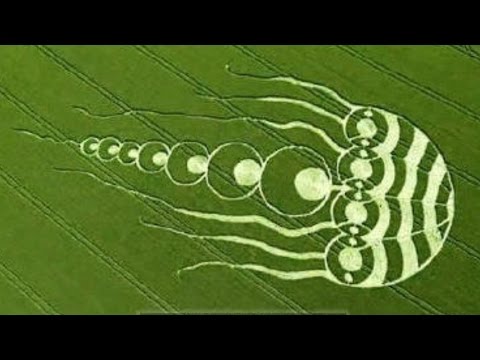
This episode takes a deep dive into the fascinating Robbert van den Broeke case from Holland, a medium known for unusual crop circles and alleged "spiritual presences." We examine the documented events surrounding a mysterious biological sample found in a field, its surprising lab identification, and the ongoing questions it raises.
- Explore the claims of Dutch medium Robbert van den Broeke, known for crop circles and alleged energetic presences.
- Discover how a mysterious organic sample from a Dutch field was independently identified by the Natural History Museum.
- Unpack the surprising laboratory finding: the material was positively identified as common octopus.
- Consider the crucial distinction between what the sample was and the unanswered question of how it appeared in an inland location.
- Review the evidence and discussions, separating documented facts from narrative claims and predictions.
Good evening, and welcome to The UK Desk from The Johny Webb Show: the week in British UFO and UAP reporting, with the paperwork in one hand and a healthy scepticism in the other. I'm Nigel, and with me as ever...
[MAGS] ...is Mags. And this week, Nigel, we're doing something a bit different. No MOD files, no aerial photographs from the Highlands. We're heading over to Holland.
[NIGEL] Indeed. This week, we're taking a deep dive into a very particular case, one that has been discussed and debated in paranormal circles for quite some time, and which Johny Webb has recently documented on johnywebb.com. The page is called 'Johny Webb and Robbert van den Broeke', and you'll find it in the site menu under 'Robbert'.
[MAGS] Right. So for those who don't know, Robbert van den Broeke is a Dutch medium. He's been a known figure in Holland for about twenty years now. On his own website, he says he's observed a great many crop circles throughout his life and that he also photographs what he describes as spiritual or energetic presences that visit him.
[NIGEL] That's his account, yes. And it's an account that has drawn both support and considerable scepticism over the years. Our purpose here is not to adjudicate, but to lay out the documented events and the various claims. The story, as presented on Johny Webb's site, begins in 2015.
[MAGS] That's when Robbert says some rather unusual, tentacle-like material first appeared at a field site near Breda, which is an airport field site. And it's important to say here, Nigel, that this is Robbert's account of finding it. It hasn't been independently confirmed.
[NIGEL] Exactly. The origin story of the material is an important distinction. Fast forward a few years to June seventeenth, two thousand eighteen. A crop formation appeared in a field in Holland. Robbert claims he was told beforehand that this formation would come. He and a filmmaker, Wm Gazecki, then went to the site.
[MAGS] That's the thing about predictions, isn't it? If someone says something will happen, and then it does, that's interesting. But it's only really checkable if there's a clear, dated record of the prediction before the event. Otherwise, it's just a story told after the fact.
[NIGEL] Precisely. The stronger the record of the advance notice, the more weight it carries. And this particular event in June two thousand eighteen is the subject of the first video on the Johny Webb page, which is titled 'Crop Circles Formations In Holland, 06-17-2018, Predicted Beforehand by Robbert Van Den Broeke'. It's the uploader's framing, of course, that it was 'predicted beforehand'. The video itself shows the formation.
[MAGS] So, Johny Webb enters the picture around this time, in two thousand eighteen. He spends several days with Robbert, around Breda and Hoeven. He arrives, as the record shows, curious rather than already convinced, which is the right way to approach these things. He walks the fields, he films what he sees, and crucially, he brings home samples of that material Robbert had described earlier, so an independent laboratory could say what it was.
[NIGEL] And that's where we get to the most established part of this case. In June two thousand eighteen, Johny took part of one of those samples to the Natural History Museum in London. He simply asked them what it was, without telling them about any extraterrestrial idea or suggesting anything beyond a straightforward identification.
[MAGS] And that's a smart way to do it, isn't it? You go to an expert, you ask a plain question, you don't lead them. That way, you're getting an objective answer.
[NIGEL] Indeed. And the museum identified the sampled tissue. They stated it was common octopus, Octopus vulgaris, from a DNA barcode match. They specified that the identification was not preliminary, and on request, they sent the raw sequencing data. That result, the identification of the tissue, is absolutely on the record. It's established.
[MAGS] So, we know what it was. Common octopus. But that still leaves the biggest question, doesn't it? HOW did common octopus tissue come to be in a field well inland in Holland? The laboratory answered what it was, but they didn't answer how it got there. Nobody has independently established the origin story.
[NNIGEL] That part is still very much open, Mags. And it's critical to understand that distinction. The laboratory result is factual, but the narrative explaining how that biological material appeared in that specific location is not. This is also covered in the second video on the Johny Webb page, titled 'ET Evidence: Johny Webb Submits ET Tentacle Sample To London Natural History Museum'. Again, the title is the uploader's choice, but the video itself documents Johny taking the sample to the museum.
[MAGS] And that brings us to the next stages. Later on, Johny and Robbert talked the results through with researcher and author Grant Cameron. Johny also recorded his own testimony of his visit to Holland.
[NIGEL] Those discussions are captured in two further videos on the Johny Webb page. The third is 'Grant Cameron with Johny Webb, Robbert Van Den Broeke: Messages From ExtraTerrestrials', where the three discuss the museum results. And the fourth, which is a two-part series, is titled 'ET Contactee has Evidence That Proves ETs Exist! (Part 2)'. This fourth video is Johny's own testimony of the Holland visit.
[MAGS] Now, about that title for the fourth video... 'ET Contactee has Evidence That Proves ETs Exist!' That's a very strong claim to put in a title, isn't it?
[NIGEL] It is, Mags. And it's important to gently but firmly state that while the museum identified the sample as common octopus, the record does not, in fact, show proof of extraterrestrial existence. It's a claim made in the title, and we distinguish between the uploader's framing and what the actual evidence, in this case, the laboratory report, states.
[MAGS] Right. It's that distinction again. An experience can be real and deeply felt by the person who had it, but a laboratory result can still point somewhere very ordinary. And keeping those two things separate is the most honest way to hold a case like this.
[NIGEL] Indeed. And it's worth noting that Robbert van den Broeke's experiences have also drawn attention from a different perspective. The Dutch writer Constantia Oomen, who is a firm sceptic and has followed Robbert's activities since the mid-2000s, has published 'Behind the scenes' posts between two thousand fifteen and two thousand twenty, setting out why she doubts the phenomena. She offers a counter-narrative, essentially.
[MAGS] Which is fair enough, isn't it? If someone has followed a case for that long and has their reasons for scepticism, that's part of the wider conversation. There's Robbert's own account, there's the laboratory finding, and then there are the people who have looked at it for years and have questions.
[NIGEL] It creates a very full picture, Mags. We have Robbert's personal experiences, documented over two decades. We have the specific claim of material appearing, then the laboratory's definitive identification of that material as common octopus, an identification that is established fact. And then the still-unanswered question of how that material came to be inland. And we have the critical analysis from sceptics like Constantia Oomen.
[MAGS] It's a fascinating and complex story, one that truly brings together those two aspects we talk about on The UK Desk: the paperwork – the lab results, the documented timeline – and the people – Robbert's experiences, Johny Webb's investigation, and the ongoing debate around it all.
[NIGEL] It is. And as we always say, for an experience to be real to the person who had it is not in doubt, but a laboratory result can still point somewhere ordinary. Our job is to keep those two strands separate, to look at the evidence as it stands, and to invite you, the listener, to weigh it for yourselves.
[MAGS] Exactly. And to do that, you really need to go and watch the videos and read the page on Johny Webb's site. It really lays it all out, and you can see the discussions for yourself.
[NIGEL] That's The UK Desk for this week. The full briefing, with every story linked to its source, is on johnywebb.com. Keep watching the skies, and keep the receipts. Good night.
[MAGS] And if you've seen something odd over your bit of Britain, write it down while it's fresh. Night, all.
 Now playing
The UK Desk discusses the UK Ministry of Defence, UFO reports and Project Condign. AI-voiced.
Background and source links: https://johnywebb.com/blog/the-uk-desk-what-the-ministry-kept
 Now playing
 Now playing
The UK Desk considers pilots, UFO reports and witness reliability. AI-voiced.
Read the accompanying article and its source links: https://johnywebb.com/blog/the-uk-desk-pilots-who-reported-what-they-saw
 Now playing
The UK Desk discusses UK UFO reports, Heathrow and the Rendlesham Forest Halt memo. AI-voiced.
Read the accompanying article and its source links: https://johnywebb.com/blog/the-uk-desk-heathrow-near-miss-rendlesham-halt-memo
DrJ Radio Live archive
For the current show website, visit DrJ Radio Live. These archive recordings may include original descriptions naming the former drjradiolive.com website. That address is no longer the current show website; historical chat-room links and schedules should not be treated as current instructions.
Recommended



Johny Webb Show joined Live with guests Mary Rodwell and Robert Morningstar 2019 02 12 20 22 44
Rendelsham Expert Unravels the Mystery - Peter Robbins
Famous UFOlogist Peter Robbins lends his years of research and common sense expertise to yet another fascinating interview.
Check out the website at http://drjradiolive.com.
Interact with the live show here: http://drjradiolive.com/content/listen/ - we monitor the chat room there.
Go to http://www.drjradiolive.com and check the show's archives with top guests right here on this channel, https://www.youtube.com/drjradiolive